
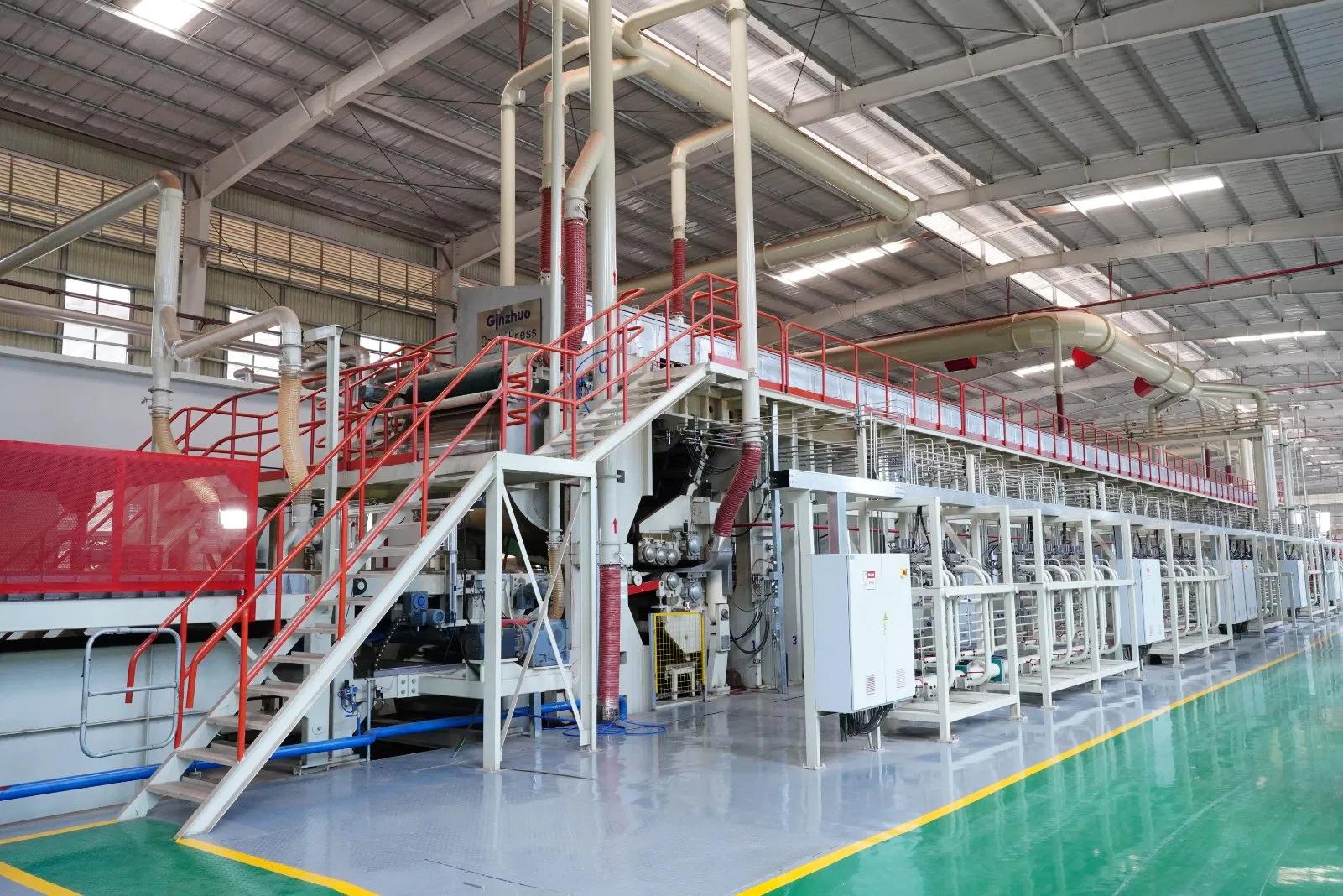
Internal Release Agents for Wood-Based Panel Manufacturing
Internal release agents play an important role in the efficient manufacture of MDF, OSB, particleboard and other engineered wood-based panels, helping manufacturers achieve reliable release while reducing press contamination, cleaning requirements and production downtime.
Modern wood panel manufacturing involves high production speeds, elevated press temperatures and increasingly demanding resin systems. Selecting the correct internal release agent for wood-based panels can therefore have a significant impact on production efficiency, press cleanliness and finished board quality.
CRC supplies specialist internal release agents for MDF, OSB, particleboard and engineered wood manufacturing, with products selected according to the resin system, wood furnish, press conditions and individual production requirements.
What Is an Internal Release Agent for Wood-Based Panels?
An internal release agent is a specialist process additive introduced directly into the wood panel manufacturing process to promote release during hot pressing.
Unlike an external release agent, which is applied to the surface of a press plate, steel belt or other production surface, an internal release agent is incorporated into the manufacturing system.
During pressing, the release agent helps prevent unwanted adhesion between the board and the press surface.
This can be particularly valuable in high-volume MDF, OSB and particleboard manufacturing, where improved release and reduced press contamination can help extend production runs and minimise costly downtime.
CRC supplies a range of release agents and additives for wood-based panel manufacturing designed for the specific requirements of the engineered wood industry.
Why Are Release Agents Important in Wood Panel Manufacturing?
During the production of engineered wood panels, wood fibres, strands or particles are combined with a resin binder before being subjected to heat and pressure.
The combination of resin, wood, high temperature and pressure creates the conditions required to manufacture a strong and consistent panel, but it can also create significant release challenges.
Without an effective release system, the board can adhere to press plates or steel belts.
This can contribute to:
- Difficult board release
- Press plate contamination
- Steel belt contamination
- Resin build-up
- Increased cleaning requirements
- Production interruptions
- Reduced press availability
- Surface defects
- Increased maintenance costs
An effective internal release agent for wood panels helps manufacturers control these problems while maintaining efficient production.
Internal Release Agents for MDF Manufacturing
MDF (Medium Density Fibreboard) is manufactured from wood fibres combined with a resin binder and consolidated under heat and pressure.
The high temperatures and pressures involved in MDF production make reliable release essential.
An internal release agent for MDF can help reduce adhesion between the panel and press surfaces while minimising unwanted resin deposits.
Correctly selected MDF release technology can contribute to:
- Reliable release from the press
- Reduced press plate or belt build-up
- Longer production runs between cleaning
- Reduced downtime
- Improved production efficiency
- More consistent board surfaces
The optimum release system will depend on the complete manufacturing process, including resin chemistry, fibre characteristics, press temperature, press type and production speed.
CRC's wood release agents and additives can be selected according to the individual requirements of the MDF production line.
Internal Release Agents for OSB Manufacturing
OSB (Oriented Strand Board) presents different release challenges to MDF.
Rather than fine wood fibres, OSB uses larger wood strands arranged in layers and bonded under heat and pressure.
The interaction between the wood strands, resin and press surfaces makes effective release technology an important part of the production process.
A specialist internal release agent for OSB manufacturing can help reduce adhesion and unwanted build-up while supporting efficient continuous production.
This is particularly important where highly adhesive resin systems are used.
Release Agents for MDI Resin Systems
MDI-based binders provide excellent bonding performance and are widely used within engineered wood manufacturing.
However, the strong adhesive characteristics that make MDI resins effective binders can also create significant release challenges during pressing.
MDI can adhere strongly to metal surfaces, making effective release technology particularly important.
A correctly selected release agent for MDI resin systems can help:
- Reduce adhesion to metal press surfaces
- Minimise resin build-up
- Improve board release
- Reduce cleaning frequency
- Extend production runs
- Reduce manufacturing downtime
Release agent selection should always consider the complete resin system and manufacturing conditions.
CRC can recommend specialist release technology according to the resin chemistry, board type, press system and operating temperature.
Internal Release Agents for Particleboard
Particleboard, sometimes referred to as chipboard, is manufactured by combining wood particles with a resin binder before pressing the material into panels.
As with MDF and OSB, reliable release from the press is essential for efficient production.
An internal release agent for particleboard manufacturing can help minimise sticking and reduce contamination of press surfaces.
The release system needs to work effectively alongside other formulation components, which may include waxes, hardeners and specialist process additives.
Selecting the correct product therefore requires an understanding of the complete particleboard formulation rather than considering release performance in isolation.
Internal Release Agents for Continuous Presses
Modern wood panel manufacturing increasingly relies on highly efficient continuous press systems.
In these processes, maintaining clean steel belts and consistent release is particularly important because contamination can affect both production efficiency and panel surface quality.
Even relatively small improvements in press cleanliness can potentially extend the period between maintenance and cleaning operations.
Specialist internal release technology can help minimise adhesion and unwanted deposits on steel belts, contributing to longer production runs and improved press availability.
Internal Release Agents for Multi-Daylight Presses
Release technology is equally important in traditional multi-daylight press systems.
Press plates need to remain clean and provide consistent release from one pressing cycle to the next.
Build-up on the plate surface can eventually affect both release and panel quality.
An effective internal release agent can help minimise contamination and reduce the frequency at which press plates need to be cleaned.
Internal vs External Release Agents for Wood Panels
Wood panel manufacturers can use both internal and external release agents, depending on their manufacturing process.
An internal release agent is incorporated into the production system, while an external release agent is applied directly to the press surface.
There are advantages to both approaches.
External release agents can provide a direct barrier between the resin and the metal surface, while internal release agents can help provide release throughout the production process without relying entirely on repeated external application.
In some applications, the optimum solution can involve a combination of internal and external release technology.
CRC supplies both technologies, allowing the release system to be selected according to the actual manufacturing process rather than taking a one-product-fits-all approach.
Explore our wood release agents and additives to see the different technologies available for engineered wood manufacturing.
Can Internal Release Agents Reduce Press Build-Up?
Reducing press contamination is one of the major reasons for optimising a wood panel release system.
Resin and other process materials can gradually accumulate on press plates and steel belts during production.
As deposits increase, manufacturers may experience deterioration in release performance and board surface quality.
Eventually, production may need to be stopped so the press can be cleaned.
A correctly selected internal release agent can help minimise this accumulation.
Potential benefits include:
- Cleaner press plates and steel belts
- Reduced resin deposits
- Longer production runs
- Less frequent cleaning
- Reduced maintenance
- Improved press availability
- More consistent board quality
For a high-output MDF, OSB or particleboard plant, reducing even relatively short periods of downtime can have a significant impact on overall productivity.
Selecting the Correct Internal Release Agent
There is no single internal release agent suitable for every wood-based panel manufacturing process.
Product selection should consider factors including:
- MDF, OSB or particleboard production
- Resin chemistry
- MDI, UF, MUF or phenolic resin systems
- Wood fibre, strand or particle characteristics
- Resin addition level
- Wax and other additives
- Press temperature
- Continuous or multi-daylight press
- Steel belt or press plate surface
- Production speed
- Required panel surface quality
Understanding these factors allows the release system to be optimised for the individual production line.
More Than Just Release
A successful release system should do more than simply prevent a board from sticking.
The objective is to achieve consistent release while maintaining production efficiency, board quality and press cleanliness.
This means considering the complete process.
Changes to resin chemistry, press temperature, production speed or other additives can influence release performance. A product that performs successfully on one MDF or OSB production line may therefore require different addition levels or a different release technology on another.
CRC works with manufacturers to evaluate the actual production conditions before recommending the most appropriate release solution.
Wood Release Agents and Additives from CRC
CRC has extensive experience supplying specialist release agents and process additives to the wood-based panel industry.
Our product range provides solutions for:
- MDF manufacturing
- OSB manufacturing
- Particleboard production
- Engineered wood products
- MDI resin systems
- Continuous presses
- Multi-daylight presses
- Steel belts and press plates
Alongside internal release agents, CRC supplies external release agents and specialist additives for wood processing, allowing us to consider the complete release requirements of the production line.
Rather than simply supplying a release agent, we work with manufacturers to identify the resin system, press conditions and source of the release problem before recommending the most appropriate product.
Improve Release in MDF, OSB and Particleboard Production
If you are experiencing board sticking, resin build-up, contaminated press plates, steel belt deposits, frequent cleaning or inconsistent release, changing or optimising your release system could significantly improve production efficiency.
CRC supplies specialist internal release agents for MDF, OSB, particleboard and other engineered wood-based panel manufacturing processes.
Whether you use MDI, UF, MUF, phenolic or another resin system, we can discuss your production conditions and recommend an appropriate internal or external release solution.
Explore our Wood Release Agents & Additives or contact CRC to discuss your process and arrange a product trial.


Non-Woven Polyester Veil – Improve Surface Finish and Performance in Composite Manufacturing
When manufacturing high-quality composite components, the choice of reinforcement is only part of the equation. Non-woven polyester veil plays an important role in improving surface finish, reducing fibre print-through and enhancing the overall appearance and durability of composite parts.
At Chemical Release Company (CRC), we supply high-quality non-woven polyester veils for a wide range of composite manufacturing processes, alongside our extensive range of release agents, mould sealers, cleaners and process additives.
What is a Non-Woven Polyester Veil?
A non-woven polyester veil, sometimes referred to as a polyester surface veil or composite veil, is a lightweight engineered material made from randomly orientated polyester fibres bonded together to create a uniform sheet. Unlike woven fabrics, the fibres are not interlaced, allowing the veil to conform easily to complex mould shapes while providing a smooth, consistent surface.
Polyester veils are widely used throughout the composites industry where both cosmetic appearance and long-term performance are important.
Benefits of Non-Woven Polyester Veil
Superior Surface Finish
One of the biggest advantages of using a non-woven polyester veil is the improved surface finish it provides. The veil creates a smooth resin-rich surface that helps hide the texture of the underlying reinforcement, producing parts that require less finishing and polishing.
Reduced Fibre Print-Through
During curing, resin shrinkage can cause reinforcement fibres to become visible on the finished part. Polyester surface veils minimise fibre print-through, helping manufacturers achieve a cleaner, more consistent appearance.
Improved Resin Flow
The open fibre structure allows resin to flow evenly through the veil, promoting excellent wet-out and reducing the risk of dry areas or uneven resin distribution.
Increased Surface Durability
Adding a polyester veil can improve resistance to abrasion, weathering and minor surface cracking, helping extend the service life of composite components.
Excellent Conformability
Because of its random fibre orientation, non-woven polyester veil easily conforms around corners, radii and complex mould geometries without wrinkling.
Applications of Polyester Veil
Non-woven polyester veil is used in many composite industries, including:
- Wind turbine blades
- Marine and boat building
- Automotive composite components
- Construction and architectural panels
- Filament winding
- Pultruded profiles
- Pipes and tanks
- Transportation
- Industrial GRP products
Manufacturing Processes
Polyester veil is compatible with many composite manufacturing methods, including:
- Hand lay-up
- Spray-up
- Resin Transfer Moulding (RTM)
- Vacuum Infusion
- Pultrusion
- Filament Winding
- Compression Moulding
Using the correct mould release agent is equally important to achieving a high-quality finish and consistent production.
Compatible Resin Systems
Non-woven polyester veil performs well with a variety of resin systems, including:
- Polyester resin
- Vinyl ester resin
- Epoxy resin
- Phenolic resin
- Selected polyurethane resin systems
Selecting the correct combination of polyester veil, release agent and mould sealer helps maximise productivity while reducing mould contamination and cleaning time.
Choosing the Right Polyester Veil
When selecting a non-woven polyester veil, consider:
- Veil weight (gsm)
- Resin compatibility
- Manufacturing process
- Surface finish requirements
- Mechanical performance
- Environmental exposure
Choosing the correct veil can improve laminate quality, reduce finishing operations and deliver more consistent production.
Why Choose Chemical Release Company?
With more than 35 years of experience supporting the composites industry, Chemical Release Company supplies premium non-woven polyester veils, release agents, mould sealers, cleaners and process additives to manufacturers throughout the UK and Ireland.
As the UK distributor for Marbocote release agents and Würtz additives, we provide technical advice, product recommendations and on-site support to help customers improve mould release, reduce build-up and increase manufacturing efficiency.
Whether you're producing components by RTM, vacuum infusion, pultrusion, filament winding or hand lay-up, our team can recommend the right products for your process.
If you're looking to improve surface finish, reduce fibre print-through or select the right non-woven polyester veil for your application, contact Chemical Release Company today. Our technical specialists can recommend the most suitable veil, release agent and process solutions to help optimise your composite manufacturing process.

What are the Alternative Release Agents for Composite Moulding?
Alternative Release Agents for Composite Moulding
If you are experiencing problems with your current release agent — such as difficult application, poor de-moulding performance, inconsistent finish quality, or unreliable supply — switching to a high-performance semi-permanent release agent can significantly improve your production process.
At CRC UK Ltd, our Marbocote semi-permanent release agents are manufactured in the UK, allowing us to provide reliable stock availability, fast delivery, and expert technical support when you need it most.
High Performance Semi-Permanent Release Agents
We offer an extensive range of mould release agents suitable for a wide variety of composite manufacturing processes including:
- GRP moulding
- Carbon fibre components
- RTM
- Vacuum infusion
- Prepreg processing
- Closed mould systems
Our release agents create a durable release film that delivers excellent release performance while helping achieve a high-quality surface finish.
Marbocote Release Agent Options
Marbocote Fastcote – Fast Wipe-On Application
A quick and easy wipe-on release agent designed for efficient application and reliable release performance.
Marbocote PK4 – Wipe-On Polish Finish
Ideal for achieving a high-quality cosmetic finish while maintaining excellent release properties.
Marbocote Spraycote FD – Spray Application Release Agent
Our fastest application system, designed for rapid mould coverage and increased productivity.
Marbocote 227CEE – Durable Semi-Permanent Release Agent
A highly durable release agent suitable for demanding moulding applications where long-lasting performance is required.
Why Choose Marbocote Release Agents?
Marbocote release agents use advanced silicone-free release technology, helping eliminate transfer and contamination issues on moulded parts.
This provides major benefits including:
- Easier de-moulding
- Reduced mould downtime
- Improved surface finish
- Reduced build-up on moulds
- Minimal cleaning requirements
- Better compatibility with secondary bonding and painting operations
- Lower release agent consumption
- Increased production efficiency
Because there is no silicone transfer, post-moulding processes such as painting, bonding, and coating become far more reliable and hassle-free.
Common Signs You Need an Alternative Release Agent
You may benefit from changing your mould release system if you are experiencing:
- Parts sticking in the mould
- Surface defects or contamination
- Excessive mould cleaning
- High release agent usage
- Long application times
- Inconsistent release performance
- Supply chain delays from overseas manufacturers
Using the correct semi-permanent release agent can reduce production downtime and improve overall part consistency.
Technical Support for Composite Moulding
Our technical team can help recommend the best release agent for your process, mould type, resin system, and production requirements.
Whether you need a wipe-on, spray-on, or highly durable release coating, CRC can help optimise your moulding process.

CRC – 35 Years of Progress & Partnership
2026 marks 35 years since CRC Chemical Release was founded — a milestone we’re incredibly proud to celebrate.
Established in April 1991 by Keith Godber, CRC began by representing EP Wurtz across the UK, USA, and Ireland delivering high-quality internal release agents and process additives Alongside Lehvoss in the UK for SMC & BMC additives, including fire retardant solutions. These early partnerships laid the foundation for what CRC stands for today — technical expertise, trusted products, and strong relationships.
As the years progressed, our portfolio expanded:
▪️ 1994 – Collaboration with Magnera to supply polyester non-woven veils
▪️ 2000 – Partnership with Marbocote, introducing semi-permanent release agents to the UK & Ireland
▪️ 2016 – Working with Adamtech to provide dry and pre-saturated wipes for the composites sector
Fast forward to today, and we’re proud to still be working with each of these partners — enabling us to support customers across the composites, rubber, and wood manufacturing industries with a broad and reliable product range.
At CRC, our success has always been built on:
✔️ Strong, long-term partnerships
✔️ Deep technical knowledge
✔️ A commitment to outstanding customer service
We would like to say a big thank you to our customers, partners, and team who have been part of this journey.
The CRC team look forward to continuing to support the industry for many years to come.
Contact CRC Today for more information
#CRC #35YearsStrong #CompositesIndustry #Manufacturing #Partnerships #TechnicalExpertise #CustomerFocus #releaseagents

Contamination Issue: Back to Basics
The Problem
Last month, a customer contacted us with an issue: their moulds were developing visible build-up and streak marks. Upon investigation during a site visit, we traced the problem back to contamination caused by repeated use of the same application cloths.
The operator believed that as long as the cloth remained wet—kept sealed in a zip-lock bag—it would be fine to reuse. Unfortunately, this is a common misconception.
@marbocote Solvent-based release agents are moisture-curing, meaning that exposure to ambient moisture begins the curing process, even while the cloth is stored. Reusing cloths, even if they appear wet, results in a partially cured product being applied to the mould. This leads to streaking, transfer, and eventual contamination.
Our Solution
Sometimes, the best way forward is to return to the fundamentals.
We introduced our operator training programme, which focuses on essential best practices and reinforces that product freshness and correct application are key to achieving optimum results.
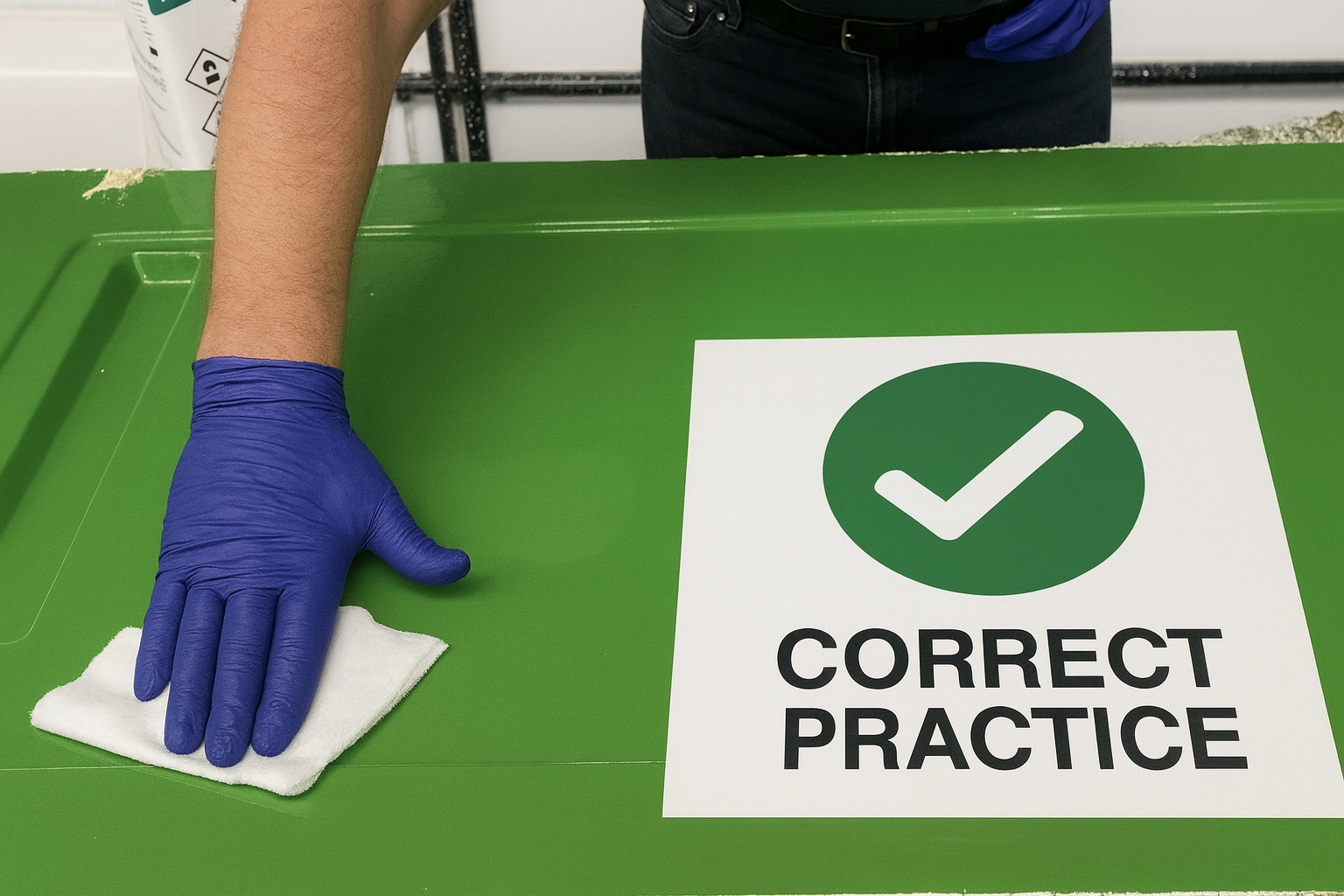
We started by revisiting mould cleaning protocols. Since release agents chemically bond to the mould surface, it’s vital that this surface is completely clean—not just free from visible dust or dirt, but also from unseen contaminants like polishing compounds and wax residues. Clean cloths must be used and changed frequently during this process to ensure a completely clean surface.
Next, we emphasised the importance of applying a Sealer before the Release Agent. The Sealer creates a solid foundation, filling in microporosity and acting as a protective buffer. As always, this must be done using fresh lint-free cloths—never those previously used for applying Release Agent.
Finally, we provided detailed guidance on proper Release Agent application techniques and best practices for re-application.
By following the correct steps from the very beginning, operators can extend mould life, improve release performance, and ultimately increase productivity.
Contact CRC today for more information
#Marbocote #Releaseagents #Freetraining&refreshercourses #backtobasics